


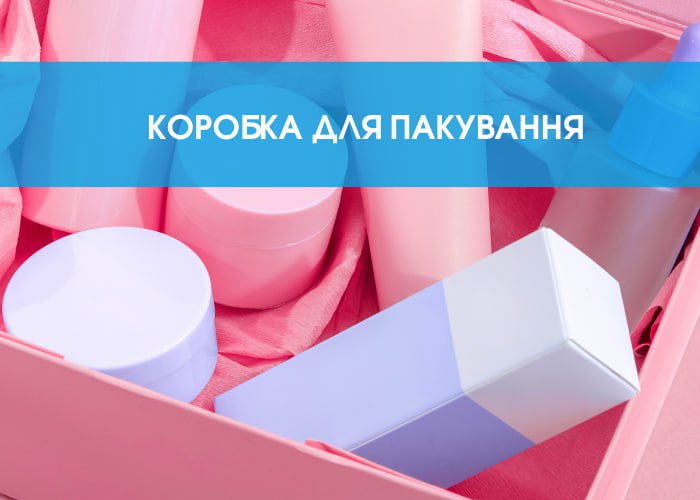


Today, buyers are not only interested in the reliability and durability of packaging, but also in its aesthetics, tactile sensations, overall design, etc.
Among the variety of packaging, boxes take the leading places in terms of strength, ease of use, appearance and ability to protect the product inside. But there are many types of goods that have their own design, shape, resistance to the influence of external factors or purpose. For each specific case, the packaging industry creates types of packaging that meet the specified criteria. Not only for keeping the product, the packaging box is the face of the company.
Forms
Usually, we are used to seeing products from cardboard boxes of one shape - rectangular. So simpler, this form is universal for mass shipment of goods, easy to make. But in order to highlight your product, emphasize the features, or the intentions of the company, you can use others:
- parallelepiped,
- square parallelepiped,
- cube,
- tetrahedron,
- cylinder,
- prism (6 or 8 faces),
- cone,
A cylinder, for example, is used to pack drawings, paintings on canvas, chips or bottles. We can see the use of cones and prisms in the packaging of sweets, cardboard boxes for sweets look very impressive in this version.

Constructions
Types of packaging differ in design, i.e. the method of opening, keeping goods, etc. This variety provides a bright presentation for products, an individual approach to customers and is simply memorable to consumers, which provides additional advertising for the company. in general, designs are divided into valve and cardboard boxes with a lid.
To summarize, here are the most common types of constructions:
- Four-valved
- With a hinged lid.
- With a lid-bottom.
- With a "swallow tail".
- With corrugated trays.
- With "show boxes".
- "Televisions".
- With a collapsible bottom.
- Valve box.
The most common option is four-valve. These are the same boxes that can be folded without any problems before sending from the post office, no special skills or engineering thought is needed here, they are sold in an unfolded form (as rectangles or squares, depending on the shape). The design includes 4 walls and 4 valves on each side, which can be closed with tape or alternating with each other.
Other types of valve boxes differ precisely in the design of the valves and the way they are closed. Thus, dovetail boxes are more reliable due to the strength of the elongated valve.
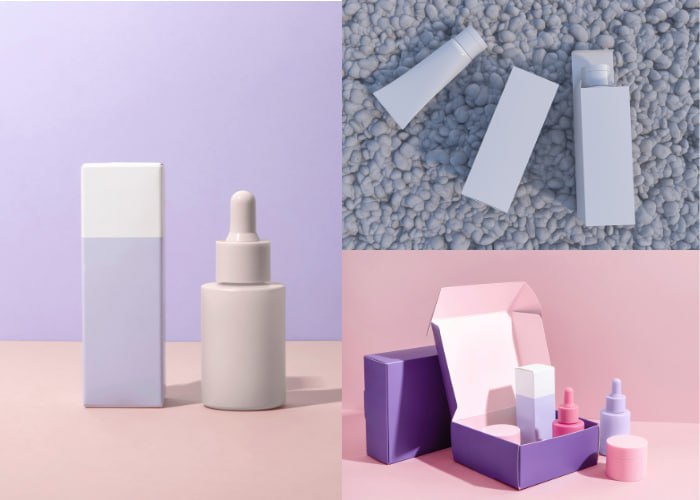
Cardboard box with a lid
The lid is essentially an extension of the box, but is slightly larger/longer in size. There are bottom covers - separate elements of the package. The hinged cover is an extension of one of the box valves, which has special lugs that fix the entire structure and hold the contents of the box. Such fixation does not require additional fastening materials - tape, ties, etc. This type of packaging is suitable only for light goods.
Separately, such a structure made of certain types of cardboard should be highlighted. Boxes made of binding cardboard with lids look impressive, add presentation to the product and do not require additional packaging if they contain a gift.
Others
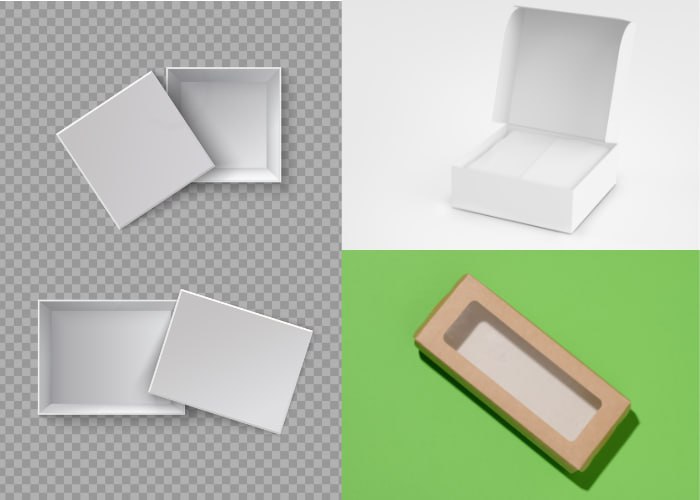
Unusual and most recognizable at the same time are options for "open" boxes, where one of the walls is missing, the valve or these elements are replaced with polyethylene or transparent plastic. You can find such packaging in supermarkets - some berries, cookies and candies are sold in corrugated boxes.
"Open boxes" are created not only for storage, but also for display. Show boxes, TVs are all options for product presentations. Consumers see cosmetics, toys, headphones, etc. in this kind of packaging.
Choosing packaging should be based on the goal for your product or company. Take into account the characteristics of the consumer, his desire for simplicity or beauty, strength or lightness.
04/06/2024
Other News


.png "Congreve and embossing - new technologies")
.png "5 tips for choosing cardboard for printing cardboard packaging")
.png "File formats for cardboard box printing")


.jpg "Participation in IFFIP 2024")
.png "Cardboard - modern packaging")
.png "Quality packaging is...")


.jpg "Packaging for goods and its varieties")
.jpg "How to increase sales with effective cardboard box design")
.png "Trends in the design of cardboard boxes 2024. How to create packaging that wins the attention of consumers")
.jpg "Stages of cardboard box production: from idea to finished product")
.jpg "Ordering and Manufacturing Cardboard Packaging")